

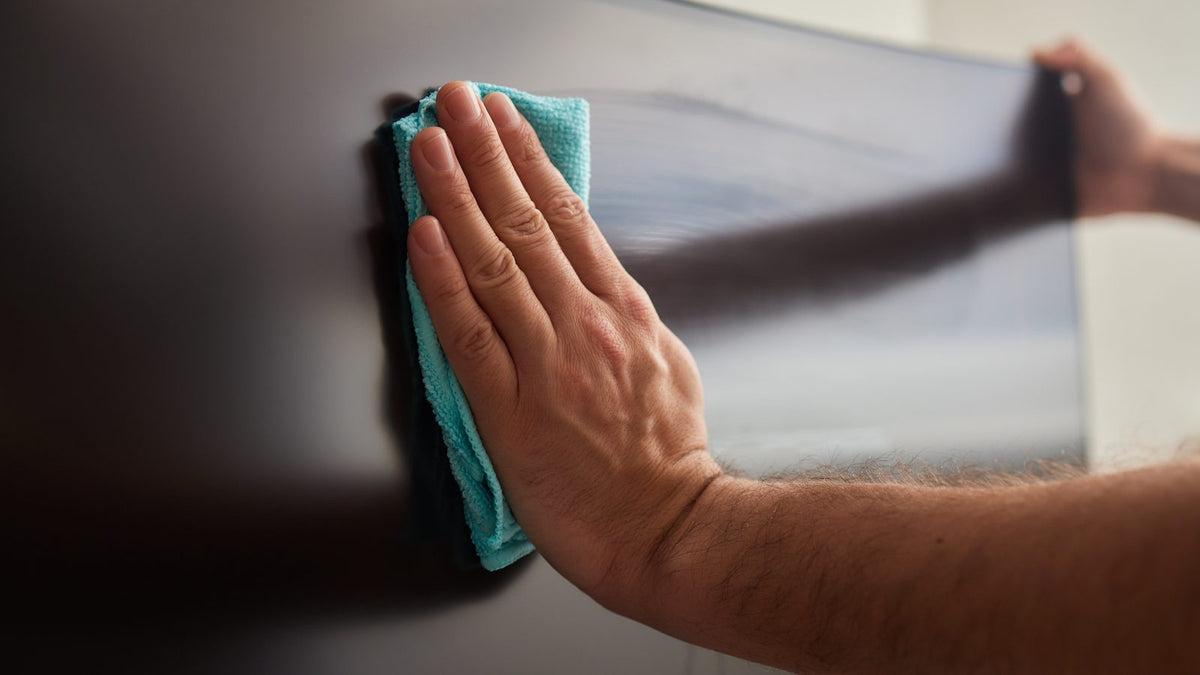
According to the material’s technical guidance, acrylic glass (plexiglass) is cleaned with lukewarm water, a little washing-up liquid and a soft cloth, without pressing, then patted dry. No dry wiping, no glass cleaner, abrasive or solvent. That guidance covers plain sheets: for our printed pictures, we stick to these gentle steps.


Acrylic glass is not cleaned like a window
Plexiglass is an acrylic sheet: a transparent plastic, not glass. The material’s technical guidance is clear on one point: for an uncoated sheet, glass cleaner is for glass only. This guide draws on that guidance and on a note from the Canadian Conservation Institute on cleaning acrylic display cases. These documents cover plain sheets; as a precaution, we apply their gentle steps to our pictures, which are 3 mm acrylic sheets.
If you are still unsure about the material itself, the difference between acrylic and glass is explained in another guide in this series.
Dusting: a soft cloth, never dry
Dust is the first nuisance with an acrylic sheet: the material holds an electrostatic charge that attracts it, notes the Canadian Conservation Institute. The guidance adds that a dry cloth, or one carrying grit, scratches the surface and increases that charge. The resulting rule is simple: a soft cloth, barely damp, wiped without pressing.
The same documents mention anti-static cleaners for plastic, which reduce the pull on dust. They describe them for bare sheets. As a precaution, for our pictures we stick to lukewarm water and mild soap.
Routine cleaning, in four steps
- Prepare lukewarm water with a little washing-up liquid, or mild soap.
- Wipe with a soft, clean, lint-free cloth, microfibre for example, dampened with the mixture, pressing very lightly.
- Rinse with a clean cloth dampened with plain water.
- Pat dry with a second soft cloth, without rubbing.
The guidance is vague about quantities: “a little” washing-up liquid. One document describes, for coated acrylic, a few drops of detergent in distilled water, or a half-and-half mix of water and isopropyl alcohol. We add no figures: very little product, lukewarm water.
Products to avoid
| Product | What the guidance says |
|---|---|
| Glass cleaner | For glass only where the sheet is uncoated, listed among the products not to use; one document allows an ammonia-free glass cleaner on coated acrylic |
| Scouring powder or cream, abrasive products | Scratch the surface; the Canadian Conservation Institute notes that many household cleaners contain abrasives |
| Acetone, petrol, benzene, thinners | Solvents listed among those that damage the material or cause fine cracking |
| Alcohols | Ethanol and other alcohols are ruled out for routine cleaning; isopropyl alcohol is mentioned by the material’s manufacturer for disinfecting a plain sheet, and by another document, mixed with water, for coated acrylic |
None of these sources deals with a printed picture, whether for isopropyl alcohol or any other product. As a precaution, we stick to lukewarm water and mild soap.
Scratches: preventing them, then what the guidance says
The first line of protection is the routine from the previous section: a clean cloth, never dry, a light touch. Once a scratch is there, the guidance describes polishing compounds for a plain sheet and, for deeper scratches, wet sanding followed by polishing. The Canadian Conservation Institute points out that this work is very time-consuming, only suits very shallow scratches, and suggests weighing up replacing the sheet.
These steps are meant for plain sheets. For a printed sheet, we have no source: as a precaution, we advise against sanding or polishing a printed picture.
Our acrylic glass prints and our frames
Our acrylic glass prints are 3 mm acrylic sheets. Framed designs protect the image with acrylic glazing: the same material, the same precautions for the front of the frame.
Acrylic glass appears across several ranges in the shop: Bordeaux and its Place de la Bourse, seen through a trompe-l’oeil window, in three sizes including 120 x 80 cm; the memorial portrait of a horse, all in shades of grey and the sepia Wanted poster from your photo, in four sizes, 80 x 60 cm being the largest.
Designs to hang are gathered in our personalised wall art, and the window views among the trompe-l’oeil prints. For how an acrylic glass print looks to the eye, another guide in the series covers it, and to choose between the four print types, see our guide “which print to choose for your photo”.
Frequently asked questions
How do you clean acrylic glass without scratching it?
Never dry: a dry cloth, or one carrying grit, scratches the sheet and increases static electricity. Wipe with a soft, clean, lint-free cloth dampened with lukewarm water and a little washing-up liquid, pressing very lightly, then rinse with plain water and pat dry. The material’s technical guidance describes these steps.
Can you clean acrylic glass with alcohol or acetone?
For routine cleaning, the guidance rules out ethanol and other alcohols, as well as acetone, petrol and thinners. Isopropyl alcohol is mentioned for disinfecting a plain sheet, or mixed with water on coated acrylic; none of it deals with a printed picture: we stick to lukewarm water and mild soap.
Is there an anti-static cleaner for acrylic glass?
Yes, anti-static cleaners for plastic exist, and the material’s guidance mentions them for reducing the pull on dust. It describes them for bare sheets, with no source on a printed picture: as a precaution, we stick to lukewarm water, mild soap and a soft, barely damp cloth.
How do you clean scratched acrylic glass?
The guidance describes polishing compounds for surface scratches on a plain sheet, and wet sanding for deeper ones; the Canadian Conservation Institute considers this work very time-consuming and suggests weighing up replacing the sheet. For a printed sheet, we have no source: as a precaution, we advise against sanding or polishing.


