

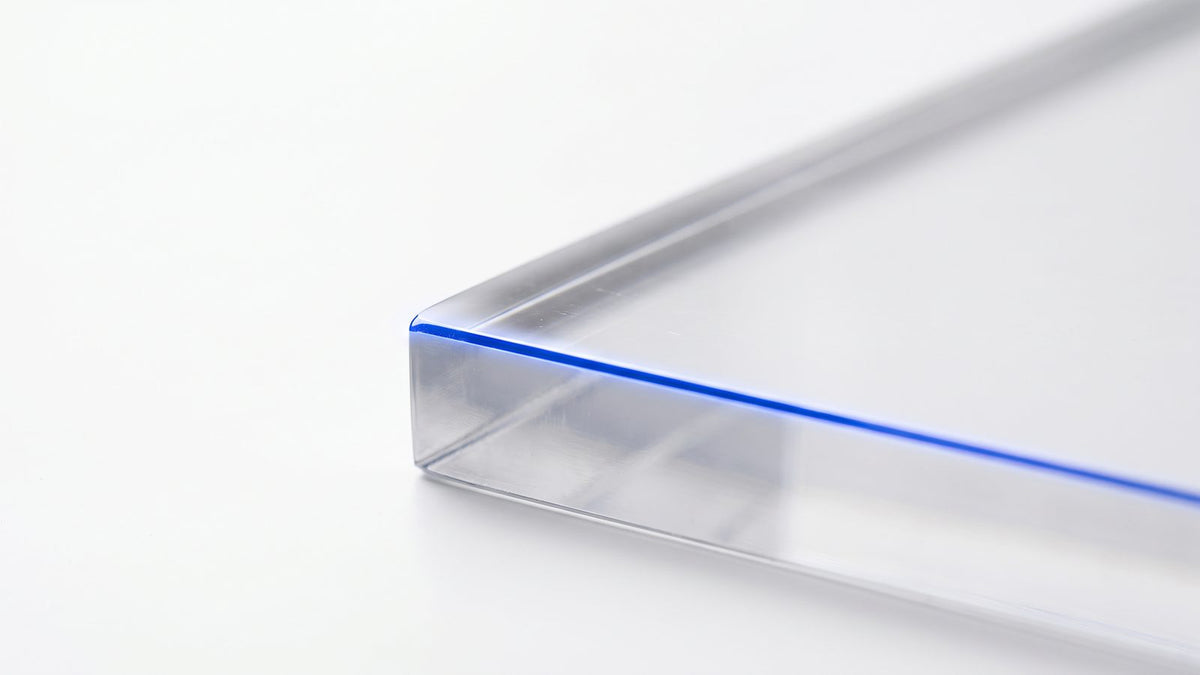
An acrylic glass print, often called a plexiglass print, is an image printed on a sheet of acrylic glass, a transparent material. On ours, the sheet is 3 mm thick, the print is laminated, the front is glossy, the edge is clear and the corners are rounded. You look at the image through the sheet, with no frame, and the colours come out brighter.
The designs featured in this article


The rooftops of Lyon, the Saône and Fourvière through an open window


We turn your dog’s photo into graffiti with a golden crown


We turn your dog or cat’s photo into a portrait as a rock star

An image printed on a transparent sheet
“Plexiglass” and “acrylic” are everyday names for a transparent plastic, polymethyl methacrylate (PMMA), also known as acrylic glass. The print transfers your image onto a sheet of this material, with no frame around it: the sheet itself is the picture. Its specifications fit in the table below.
| Specification | Our acrylic glass print |
|---|---|
| Material | Acrylic glass sheet (plexiglass) |
| Thickness | 3 mm |
| Laminated | |
| Front | Glossy |
| Edge and corners | Clear edge, rounded corners |
| Hanging | A fixing suited to the size is supplied with the print |
| Sizes | 30 x 20, 40 x 30, 60 x 40 and 80 x 60 cm; 120 x 80 cm for the trompe-l’oeil series |
How the image looks under the sheet
The material lets light through almost as glass would: you see the image through the sheet, under a glossy surface that brightens the colours.
The result varies with the image you send. A design with bold colours or a dark background suits it well; a photo taken in soft light keeps its original mood. Like any glossy surface, this one reflects some of the light in the room: it is easier to place where the lighting stays soft.
Acrylic, not glass
Despite its appearance, the sheet is not made of glass, and neither material is best everywhere: the choice depends on the use. For weight, knocks and scratches, see our comparison of acrylic and glass. For dust and fingerprints, our page on caring for acrylic glass explains what to do.
Our framed prints, for their part, are protected by acrylic glazing rather than real glass.
Which size for which wall
Across the whole range, four sizes come up: 30 x 20, 40 x 30, 60 x 40 and 80 x 60 cm. The shop’s trompe-l’oeil series offers three: 60 x 40, 80 x 60 and 120 x 80 cm. The small sizes suit a modest stretch of wall, the large ones a bigger room. To decide based on the width of your wall, a dedicated guide answers the question: the right picture size for your room.

Three acrylic glass examples
You select it in the configurator, among the other options the design offers: canvas print, poster or framed print. To compare these materials side by side, see which print type to choose. Three designs show what the sheet brings.
Lyon, from 60 x 40 to 120 x 80 cm
The window opening onto Lyon can be ordered on acrylic glass in three sizes, from 60 x 40 to 120 x 80 cm. Its warm tones and clear sky go well with the glossy surface.
The graffiti dog, from 30 x 20 to 80 x 60 cm
The street art portrait of your dog brings together several bright colours on one background: the kind of image the sheet shows off. Four sizes are available, from the smallest to the largest.
The rocker portrait on a dark background
The rocker portrait of your dog or cat sits on a dark background that the glossy front sets off, in the same four sizes, from 30 x 20 to 80 x 60 cm.
Frequently asked questions
What is a photo on acrylic?
It is an image transferred onto a sheet of acrylic glass, the material also known as plexiglass. You look at the image through the sheet, with no glazing or frame around it. The specifications of our sheets, from thickness to edge, are gathered in the table earlier in this article.
Are there large sizes for acrylic glass prints?
Yes. Depending on the design, our acrylic glass prints range from 30 x 20 to 80 x 60 cm, and the window prints go up to 120 x 80 cm. You select it in the configurator, along with the print type, once you have chosen the design.
How do you hang an acrylic glass print?
A fixing suited to the size is supplied with the print: each sheet size comes with the one that fits it. There is no frame to add, the sheet goes straight onto the wall of your choice. All that is left is to decide where, depending on the room and the size you picked.
Is acrylic glass plastic?
Yes, it is a plastic: polymethyl methacrylate (PMMA), also called acrylic glass despite its name. Its nature sets it apart from mineral glass, while in many cases it lets light through almost as well, hence the sharpness of the image.


